CORROSION & WEATHER
Water Pooling Inside the Grill After Rain
THE SHORT ANSWER
Water inside the cook chamber almost always means the grease drain is blocked with hardened fat, so rain that gets past the lid has nowhere to leave. Clear the drain hole with a wooden skewer, empty and refit the catch pan, and check that the grill sits with a slight tilt toward the drain rather than perfectly level. A cover that is not vented will trap the moisture that does get in and turn a drainage problem into a rust problem.
pitandsear participates in the Amazon Services LLC Associates Program. If you buy through a link on this page we may earn a commission at no extra cost to you. Full disclosure.
Check these first (they cost nothing)
- Pour a cup of water into the drip tray. If it pools instead of running out into the cup, the drain is blocked and that is your answer.
- Check whether the grill sits level. It needs a slight tilt toward the drain — a dead-level grill has no reason to send water anywhere.
- Look at the cover. A cover with no vents holds condensation in, so it can be the source of standing water rather than the protection against it.
- Look at where the grill is parked. Directly under an eave or a gutter join means it takes concentrated drip every time it rains.
What's actually causing it
These are ordered deliberately. Number one is the cause that turns out to be the answer most often, so work down the list rather than jumping to the one that sounds most dramatic.
The grease drain is blocked with hardened fat
Most commonHow to confirm it
Water poured into the tray sits there. Scraping at the drain hole with a skewer meets solid resistance rather than passing through.
How to fix it
- Let the grill cool completely and shut the gas off at the tank.
- Work a wooden skewer or a plastic zip tie through the drain hole until it passes freely.
- Scrape the full length of the drain channel with a plastic putty knife.
- Flush with hot water and dish soap and confirm it now runs straight into the cup.
- Re-check the drain with a skewer every few cooks — ten seconds prevents the whole problem.
Repair or replace — Fix it yourself. This is the cause in the large majority of cases and it costs nothing but a skewer.
The cover is trapping moisture rather than shedding it
CommonHow to confirm it
Lift the cover after rain and look at the inside face. Beads of condensation on the underside mean the cover is sealing evaporating moisture in against the metal.
How to fix it
- Only ever cover a grill that is completely cold and completely dry.
- Choose a cover with air vents on both sides so trapped humidity can escape.
- Check that the hem clears the ground rather than dragging, which wicks water upward.
- Lift the cover periodically in wet weather to air the cabinet out.
Repair or replace — Replace an unvented cover. A cover without vents can cause more moisture damage than no cover at all.
What you'll need
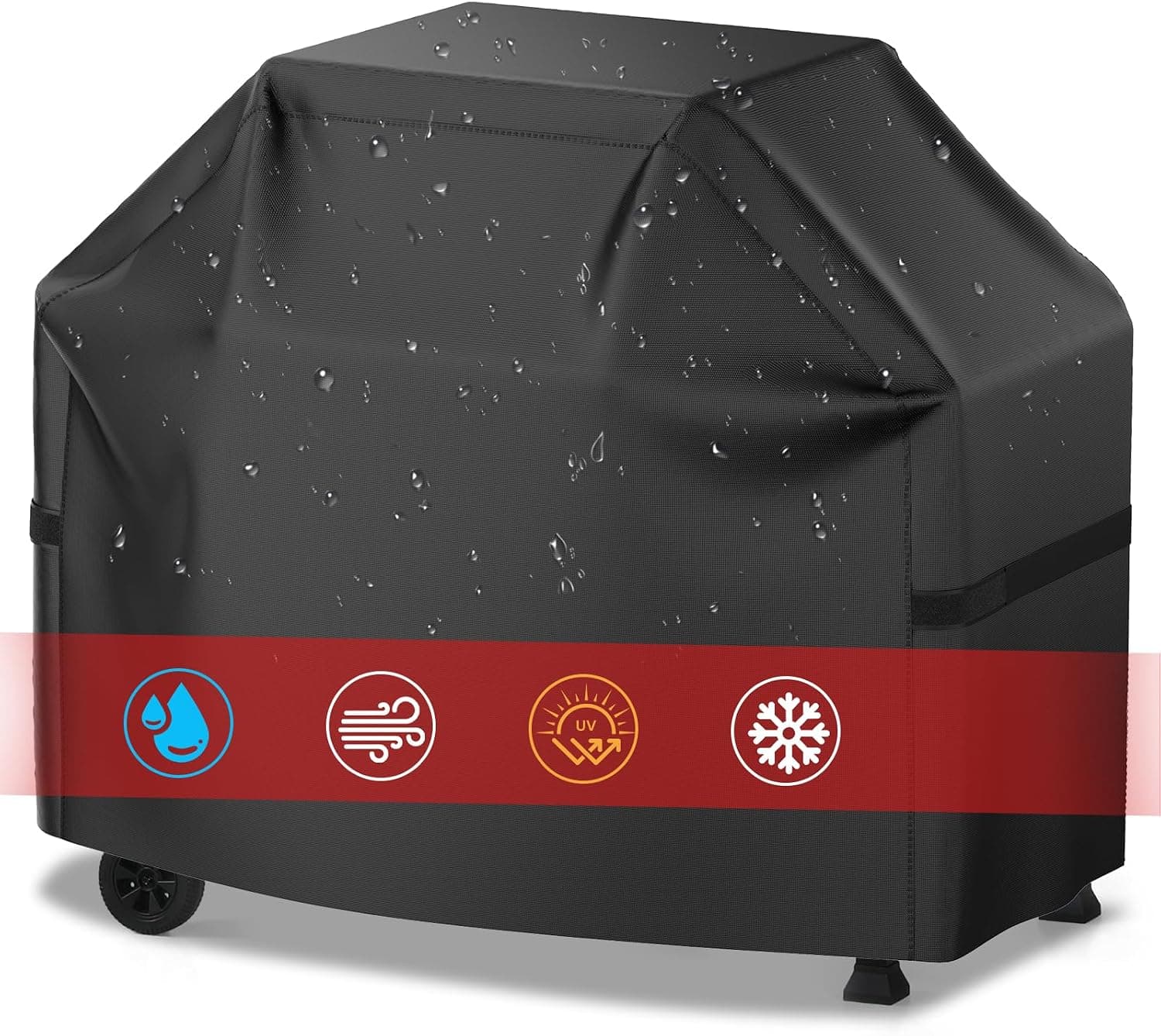 Best Overall
VIBOOS
VIBOOS Grill Cover, 58 inch
Best for exposed patios that get wind as well as rain
Wind is what destroys covers, so hook-and-loop straps plus a drawstring hem matter more than most buyers expect — an unsecured cover flaps and abrades itself against the cabinet edges. Waterproof and anti-UV with a rip-proof fabric. At 58 inches it suits most three to four burner gas grills.
58 in, waterproof, straps + drawstring
The grill is parked where it takes concentrated runoff
CommonHow to confirm it
The water appears after rain even when the drain is clear, and there is a wet stripe on the lid or the cover directly under an eave, a gutter join or an overhanging branch.
How to fix it
- Move the grill out from under the drip line, which also improves clearance from the structure.
- Confirm the new position still meets the recommended distance from walls, railings and overhangs.
- Put a floor pad underneath so the base is not standing in the runoff that collects there.
- If the grill cannot move, fix the gutter rather than accepting the drip.
Repair or replace — Fix it yourself by moving the grill. The clearance benefit alone is worth doing regardless.
What you'll need
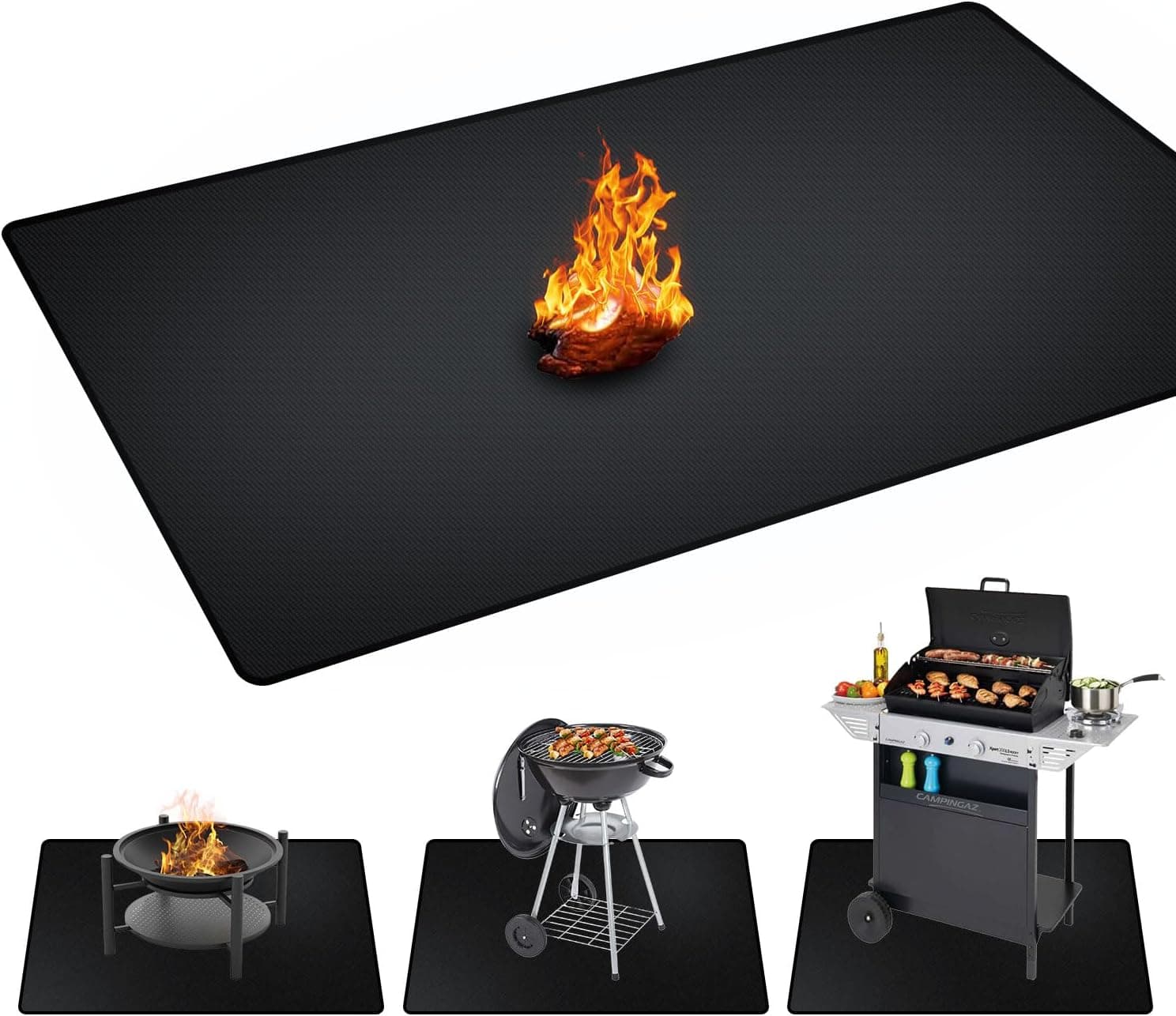 Best for Decks & Patios
Under-Grill Floor Mat, 48 x 30 inch
Best for protecting a deck or patio under the grill
This is the mat that actually addresses deck staining and scorched grass, and at 48 by 30 inches it extends past the cabinet footprint where most drips land. Double-sided fireproof construction with an oil and waterproof surface, stated for deck and grass use. Size is the specification that matters most in this group.
48 x 30 in, fireproof, waterproof
Failed lid seal or a warped lid letting rain straight in
Less commonHow to confirm it
Look along the closed lid seam from the side. A visible gap, or a lid that rocks when you press one corner, means water has a direct route into the chamber.
How to fix it
- Check first that nothing is propping the lid open — a warped flame tamer or a tall rotisserie bracket is a common culprit.
- On a cooker with a gasket, run a dollar bill through the closed seam at several points and replace the gasket if it pulls free everywhere.
- Reseat or replace any warped internal part that is holding the lid up.
- A permanently warped lid on a gas grill is generally the point at which replacement makes more sense than repair.
Repair or replace — Replace the gasket if there is one. A warped lid itself is not repairable at home.
Wet pellets or a flooded hopper on a pellet grill
Less commonHow to confirm it
Water is in the hopper or the firepot rather than the cook chamber, and the pellets have swollen, softened or turned to sawdust.
How to fix it
- Unplug the grill before putting your hands anywhere near the auger.
- Empty the hopper completely and discard any pellet that has swollen — swollen pellets jam augers.
- Vacuum the firepot and the chamber floor, and check the auger tube is clear.
- Let everything dry fully before refilling with dry pellets from a sealed container.
- Store pellets indoors in a sealed bucket, not in the hopper between cooks.
Repair or replace — Fix it yourself. Never try to burn swollen pellets — a jammed auger and a hopper fire are both real outcomes.
All the causes side by side
| Cause | How to confirm | Fix time | Part needed | Difficulty |
|---|---|---|---|---|
| The grease drain is blocked with hardened fat | Water poured into the tray sits there. Scraping at the drain hole with a skewer meets solid resistance rather than passing through. | 15 minutes | None | Easy |
| The cover is trapping moisture rather than shedding it | Lift the cover after rain and look at the inside face. Beads of condensation on the underside mean the cover is sealing evaporating moisture in against the metal. | 10 minutes | Grill Covers | Easy |
| The grill is parked where it takes concentrated runoff | The water appears after rain even when the drain is clear, and there is a wet stripe on the lid or the cover directly under an eave, a gutter join or an overhanging branch. | 20 minutes | Grill Mats & Floor Pads | Easy |
| Failed lid seal or a warped lid letting rain straight in | Look along the closed lid seam from the side. A visible gap, or a lid that rocks when you press one corner, means water has a direct route into the chamber. | 45 minutes | None | Moderate |
| Wet pellets or a flooded hopper on a pellet grill | Water is in the hopper or the firepot rather than the cook chamber, and the pellets have swollen, softened or turned to sawdust. | 40 minutes | None | Moderate |
Stop it from coming back
Standing water inside a firebox is nearly always a drainage failure rather than a sealing failure. Rain will find its way past any lid, and that is fine as long as it has somewhere to go. Run a wooden skewer through the grease drain every few cooks, keep the channel scraped, and park the grill with a slight tilt toward the drain rather than dead level.
The second half is the cover. Only ever cover a cold, dry grill, and only with a cover that has vents — an unvented cover on a damp cooker seals moisture against the metal for days and causes exactly the rust it was bought to prevent. Getting the grill out from under an eave or a gutter join solves the problem at the source and improves your clearance from the structure at the same time.
Related problems
CORROSION & WEATHER
Rust on the Grill Grates
CORROSION & WEATHER
Mold and Mildew Growing Under the Grill Cover
RESIDUE & DEBRIS
Heavy Grease Buildup in the Firebox and Drip Tray
HEAT & FIRE
Smoker Temperature Keeps Swinging Up and Down
Questions people actually ask
No. Let it dry fully first. Water on a burner tube causes uneven ignition and thermal shock to hot metal, and on a pellet grill wet pellets jam the auger and can ignite unpredictably once they finally catch. Drain, dry, and inspect before lighting.
Yes, but the cover has to have vents and it must only go on a cold, dry grill. A vented cover on a dry cooker extends its life by years. An unvented cover on a warm or damp one is a greenhouse and does real harm.
Two possibilities. Either the cover has no vents and you are seeing condensation from moisture that was already inside, or the cover is not shedding properly and water is pooling on top and finding its way in at a seam. Check the inside face of the cover after rain — condensation looks different from run-in.
Don’t. Grills already have a designed drain path, and an extra hole in the firebox floor lets grease drip onto whatever is under the grill instead of into the cup. Clear the existing drain rather than adding a new one.
Every few cooks, and always at the end of the season. It is a ten-second job with a wooden skewer, and it is the difference between rain leaving the grill and rain sitting in it all winter next to bare metal.
Sources
pitandsear participates in the Amazon Services LLC Associates Program. If you buy through a link on this page we may earn a commission at no extra cost to you. Full disclosure.