SPACE & SAFETY
Scorched Grass and Heat Marks Under the Grill
THE SHORT ANSWER
Grass under a grill dies from two things at once: radiant heat from the firebox and salt-heavy grease dripping into the root zone. Move the grill onto a hard surface or an insulating pad, flush the affected soil with water to dilute the fat, then rake, top-dress and reseed. A grill sitting directly on turf is also a genuine fire risk in dry weather, which is the more important reason to change the setup.
pitandsear participates in the Amazon Services LLC Associates Program. If you buy through a link on this page we may earn a commission at no extra cost to you. Full disclosure.
Check these first (they cost nothing)
- Look at the shape of the dead patch. If it matches the firebox footprint, it is radiant heat. If it is scattered spots, it is dripped fat.
- Check how much clearance there is under the grill. A cart with six inches of air beneath it does far less damage than a kettle sitting on its legs in the grass.
- Water the area heavily before you do anything else. Diluting the salt and fat in the root zone is free and it is the first step regardless of cause.
- Check whether the grass is dead or dormant. Tug a handful — if it resists, the crowns are alive and it will recover on its own.
What's actually causing it
These are ordered deliberately. Number one is the cause that turns out to be the answer most often, so work down the list rather than jumping to the one that sounds most dramatic.
Radiant heat from the firebox cooking the root zone
Most commonHow to confirm it
The dead area is a clean rectangle matching the grill footprint, with a sharp edge. Grass right at the boundary is fine, which rules out a chemical or fat cause.
How to fix it
- Move the grill onto a hard surface — pavers, a patio, or a gravel pad.
- If it has to stay on grass, put an insulating floor pad underneath and move the grill every few cooks.
- Choose a pad with a genuine fiber or air layer, not a thin silicone sheet, which conducts heat straight through.
- Water the affected area deeply to help the surviving crowns recover.
Repair or replace — Fix it yourself by relocating. A grill on turf is also a fire risk in dry weather, which is the better reason.
What you'll need
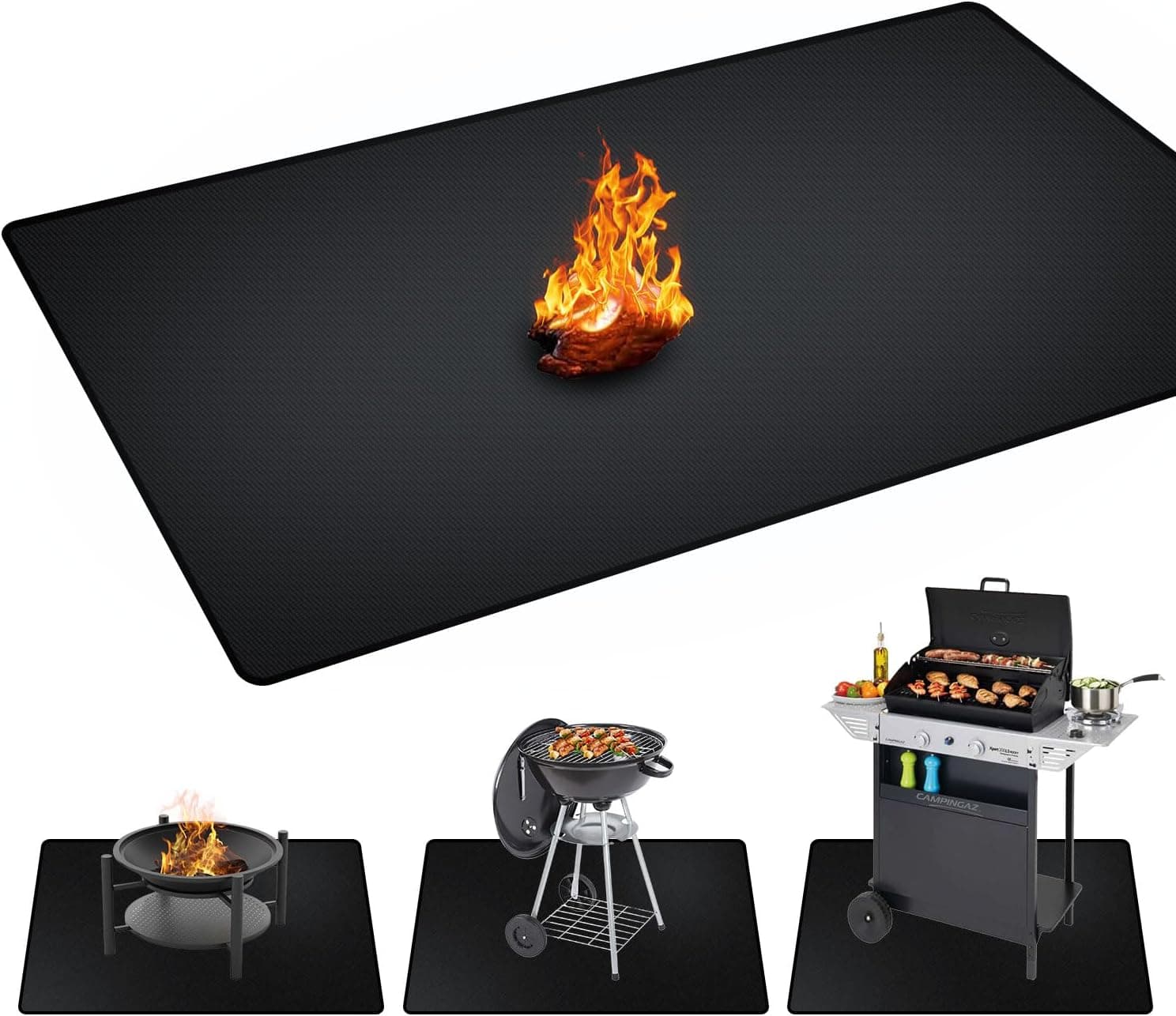 Best for Decks & Patios
Under-Grill Floor Mat, 48 x 30 inch
Best for protecting a deck or patio under the grill
This is the mat that actually addresses deck staining and scorched grass, and at 48 by 30 inches it extends past the cabinet footprint where most drips land. Double-sided fireproof construction with an oil and waterproof surface, stated for deck and grass use. Size is the specification that matters most in this group.
48 x 30 in, fireproof, waterproof
Rendered fat dripping into the soil
CommonHow to confirm it
Dead spots are irregular and scattered rather than a clean rectangle, and the soil smells or feels greasy. Often accompanied by an overflowing grease cup.
How to fix it
- Empty the grease cup and clear the drain so fat stops reaching the ground.
- Flush the affected soil with plenty of water to dilute the fat and the salt that came with it.
- Work a little dish soap into the water for the first flush — it emulsifies fat so the water can carry it down.
- Rake the surface lightly to break any greasy crust before reseeding.
Repair or replace — Fix it yourself. Free, and it stops the ongoing damage rather than just treating the symptom.
Salt and marinade concentrating in the soil
CommonHow to confirm it
Grass dies in a halo around the grill rather than directly under it, and the pattern follows where you brush and baste. Heavy brines and rubs carry a lot of salt.
How to fix it
- Do the seasoning and basting indoors or over a tray rather than over the lawn.
- Flush the affected soil heavily with water — salt is soluble and leaching is the only way out.
- Repeat the flush over several days rather than once.
- Reseed once the soil has been leached rather than immediately.
Repair or replace — Fix it yourself with a hose and a change of habit. Nothing to buy.
Falling embers and ash scorching the surface
CommonHow to confirm it
There are small individual burn spots as well as a larger dead area, and you find ash or spent charcoal in the grass. Common with charcoal grills and fire pits.
How to fix it
- Empty the ash catcher into a metal container, never onto the lawn or into a plastic bin.
- Wait until ash is completely cold — 48 hours is a reasonable rule — before disposing of it.
- Set the cooker on a hard pad so falling embers land on something non-combustible.
- Never use a charcoal grill or fire pit on grass during a burn ban or in drought conditions.
Repair or replace — Fix it yourself. This one is a fire-safety issue as much as a lawn issue.
What you'll need
How to choose grill mats & floor pads →Soil compacted from the grill sitting in one place
Less commonHow to confirm it
The area is thin and struggling rather than dead outright, and a screwdriver pushed into the soil meets much more resistance there than a few feet away.
How to fix it
- Aerate the area with a garden fork, working it in and rocking it gently every few inches.
- Top-dress with a thin layer of compost or good topsoil.
- Overseed and keep the area watered until it establishes.
- Move the grill onto a hard standing so the compaction does not simply return.
Repair or replace — Fix it yourself with a garden fork. Slow to recover but entirely reversible.
All the causes side by side
| Cause | How to confirm | Fix time | Part needed | Difficulty |
|---|---|---|---|---|
| Radiant heat from the firebox cooking the root zone | The dead area is a clean rectangle matching the grill footprint, with a sharp edge. Grass right at the boundary is fine, which rules out a chemical or fat cause. | 20 minutes | Grill Mats & Floor Pads | Easy |
| Rendered fat dripping into the soil | Dead spots are irregular and scattered rather than a clean rectangle, and the soil smells or feels greasy. Often accompanied by an overflowing grease cup. | 30 minutes | None | Easy |
| Salt and marinade concentrating in the soil | Grass dies in a halo around the grill rather than directly under it, and the pattern follows where you brush and baste. Heavy brines and rubs carry a lot of salt. | 15 minutes over several days | None | Easy |
| Falling embers and ash scorching the surface | There are small individual burn spots as well as a larger dead area, and you find ash or spent charcoal in the grass. Common with charcoal grills and fire pits. | 10 minutes | Grill Mats & Floor Pads | Easy |
| Soil compacted from the grill sitting in one place | The area is thin and struggling rather than dead outright, and a screwdriver pushed into the soil meets much more resistance there than a few feet away. | 45 minutes | None | Moderate |
Stop it from coming back
A grill parked on grass damages it three ways at once — radiant heat from below the firebox, rendered fat soaking into the root zone, and falling ash. Moving the cooker onto pavers, a patio or a gravel pad removes all three in one step, and it also removes the fire risk that comes with an open flame sitting on dry vegetation.
If the grill genuinely has to live on the lawn, the workable compromise is an insulating floor pad with a real fiber or air layer rather than a thin silicone sheet, plus moving the cooker every few cooks so no single patch takes the whole season. Keep the grease cup empty so fat is not reaching the soil in the first place, and never dispose of ash on the lawn — give it 48 hours in a metal container before it goes anywhere.
Related problems
SPACE & SAFETY
Grease Stains on the Deck Under the Grill
SPACE & SAFETY
How Far the Grill Actually Needs to Be From the House
COOKING FAULTS
Constant Flare-Ups Are Charring Everything
OPEN FIRE
Campfire Is Too Hot to Roast Anything Properly
Questions people actually ask
Often yes, if the crowns survived. Tug a handful — if it resists, the plant is alive and deep watering will bring it back over a few weeks. If it pulls out with no root, the area needs raking, top-dressing and reseeding.
Gas grills on a cart with good ground clearance are generally fine on a green, well-watered lawn. Charcoal grills and fire pits are a different matter — falling embers and radiant heat both ignite dry vegetation, and using either on grass during a burn ban or in drought is genuinely dangerous.
Wood ash has some potassium value but charcoal briquette ash may contain binders and additives, and it is strongly alkaline. More importantly, ash stays hot far longer than it looks — give it 48 hours in a metal container before disposing of it anywhere.
One that insulates rather than just resists heat. A thin silicone-coated sheet shrugs off splashes but conducts heat straight through to the turf. Look for a stated continuous-use temperature rating and real thickness, and move the grill periodically regardless.
Flush it heavily with water, adding a little dish soap to the first flush to emulsify the fat so the water can carry it down. Repeat over several days. Salt from brines and rubs is also soluble and leaches out the same way. Reseed only after the leaching, not before.
Sources
pitandsear participates in the Amazon Services LLC Associates Program. If you buy through a link on this page we may earn a commission at no extra cost to you. Full disclosure.