SPACE & SAFETY
Grease Stains on the Deck Under the Grill
THE SHORT ANSWER
Fresh grease lifts with dish soap and hot water; grease that has soaked in needs something that draws oil out of the pores, which means a poultice of baking soda or powdered laundry detergent left on the stain for several hours. Do not start with a pressure washer on wood — it drives the oil deeper and raises the grain. Once the stain is out, put a mat under the grill so it does not happen again.
pitandsear participates in the Amazon Services LLC Associates Program. If you buy through a link on this page we may earn a commission at no extra cost to you. Full disclosure.
Check these first (they cost nothing)
- Work out how fresh the stain is. Grease still on the surface lifts with dish soap and hot water; grease that has soaked in needs something that draws oil back out of the pores.
- Look at where the stains actually are. Most sit under the front lip and the side shelves rather than directly beneath the firebox, which tells you where the drips come from.
- Check the grease cup before you clean anything. If it has been overflowing, the stain will simply come back.
- Identify the surface. Wood, composite and concrete each need a different method, and the wrong one makes the mark permanent.
What's actually causing it
These are ordered deliberately. Number one is the cause that turns out to be the answer most often, so work down the list rather than jumping to the one that sounds most dramatic.
The grease cup has been overflowing
Most commonHow to confirm it
There is a fat trail running down the outside of the cabinet from the drain outlet, and the stain below it is heaviest in a line rather than spread out.
How to fix it
- Empty and wash the cup, and fit a disposable liner if your model takes one.
- Check the cup at the end of every cook and empty it at half full.
- Clear the grease drain with a wooden skewer so fat reaches the cup instead of backing up.
- Wipe the outside of the cabinet before the trail bakes on.
Repair or replace — Fix it yourself. Until the cup stops overflowing, every stain you remove will come straight back.
Fresh grease sitting on the surface
CommonHow to confirm it
The stain is dark, slightly tacky, and less than a few days old. A drop of water beads on it rather than soaking in.
How to fix it
- Blot up any liquid with paper towel first — do not spread it around with a cloth.
- Cover the area with a thick sprinkle of baking soda or cornstarch and leave it 15 minutes to absorb.
- Sweep the powder up, then scrub with hot water and a grease-cutting dish soap using a stiff brush.
- Rinse thoroughly and let it dry before judging the result.
Repair or replace — Fix it yourself with what is already in the kitchen. No specialist product needed at this stage.
Grease has soaked into wood or concrete
CommonHow to confirm it
The stain is a dark shadow rather than a film, and washing the surface makes no difference. The oil is inside the pores of the material, so surface cleaning cannot reach it.
How to fix it
- Make a poultice: mix baking soda or powdered laundry detergent with a little water into a paste the thickness of peanut butter.
- Spread it about a quarter inch thick over the whole stain, extending an inch past the edges.
- Cover with plastic sheeting taped at the edges and leave it for several hours or overnight — the drying paste draws oil upward out of the pores.
- Scrape the dried poultice off, rinse, and repeat. Deep stains often need two or three cycles.
- Only after the oil is out should you consider a degreaser or a deck brightener for the remaining discoloration.
Repair or replace — Fix it yourself, with patience. A poultice is slow but it is the only thing that pulls oil back out of a porous surface.
A pressure washer was used first and drove the oil deeper
CommonHow to confirm it
The stain got lighter at the edges and darker in the middle after washing, and on wood the grain has raised and gone fuzzy.
How to fix it
- Stop pressure washing the stain. On wood it drives oil deeper and damages the fiber.
- Let the surface dry completely — several days if it was soaked.
- Sand raised grain lightly once dry, going with the grain, before any further treatment.
- Return to the poultice method, which works on the oil rather than against the wood.
Repair or replace — Fix it yourself, but change method. The pressure washer belongs at the end of the process, not the start.
Nothing is catching the drips
CommonHow to confirm it
New spots appear after every cook regardless of how carefully you clean. There is nothing under the grill, or the mat is smaller than the grill’s actual drip footprint.
How to fix it
- Fit a mat that extends at least twelve inches beyond the grill on every side — drips do not fall straight down.
- Check it has a bound or raised edge so a spill is held rather than running straight off.
- Hose or wipe the mat at the same time you empty the grease cup.
- Lift the mat occasionally and check what is happening underneath; a mat that traps moisture against wood causes its own problems.
Repair or replace — Fix it yourself with a mat sized properly. This is the cheapest insurance on an expensive surface.
What you'll need
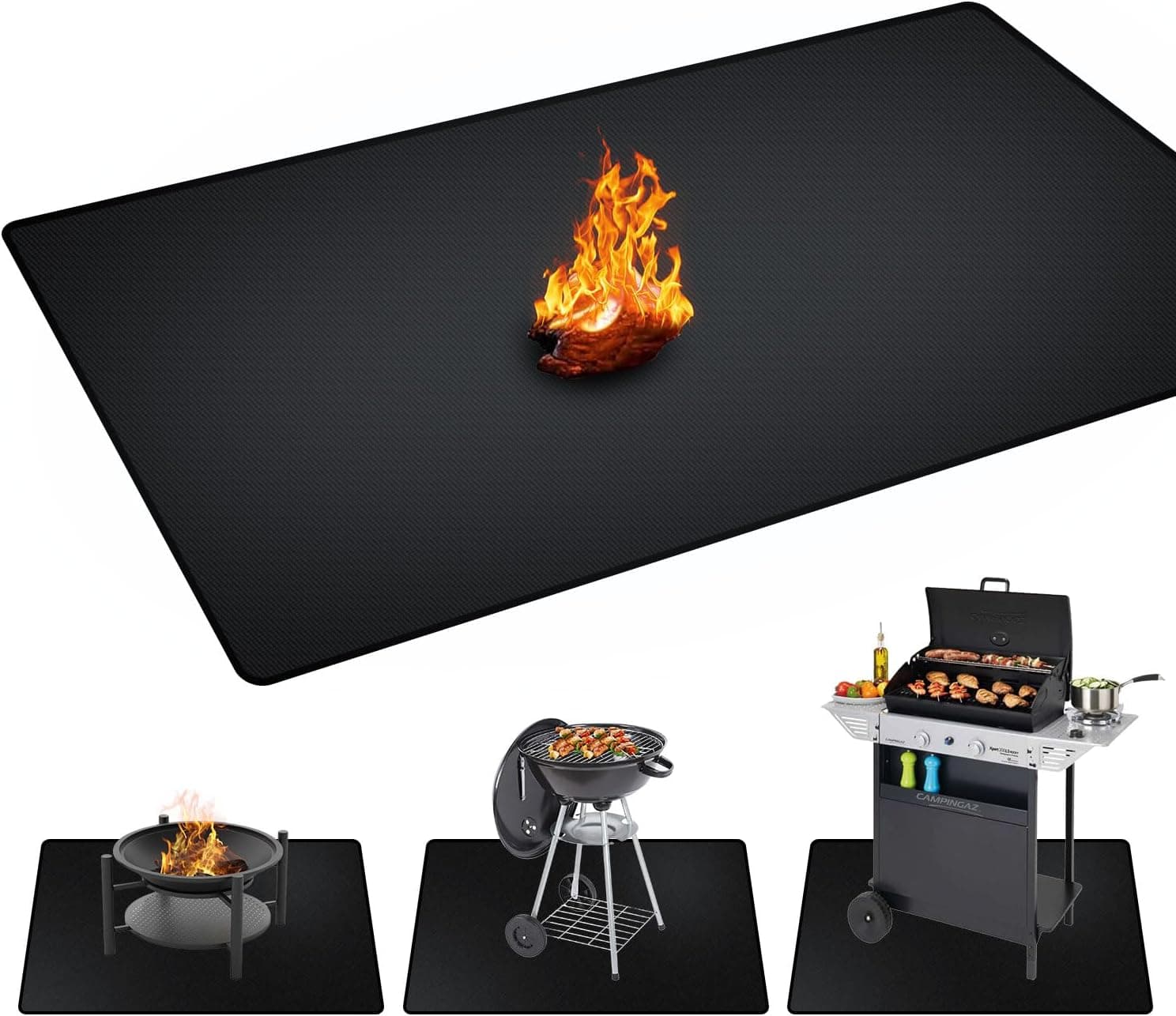 Best for Decks & Patios
Under-Grill Floor Mat, 48 x 30 inch
Best for protecting a deck or patio under the grill
This is the mat that actually addresses deck staining and scorched grass, and at 48 by 30 inches it extends past the cabinet footprint where most drips land. Double-sided fireproof construction with an oil and waterproof surface, stated for deck and grass use. Size is the specification that matters most in this group.
48 x 30 in, fireproof, waterproof
The decking is saturated over a wide area
RareHow to confirm it
The boards under and around the grill are uniformly darkened, feel slightly greasy to the touch, and the discoloration goes right through when you sand a test patch.
How to fix it
- Treat this as a fire risk, not a stain. Grease-saturated wood ignites more readily than clean wood.
- Move the grill off that section permanently, onto a hard non-combustible surface.
- Assess whether the affected boards should be replaced rather than cleaned.
- Confirm the new position meets the recommended clearance from the structure and any railing.
Repair or replace — Call a professional if boards need replacing. Either way, the grill should not go back where it was.
All the causes side by side
| Cause | How to confirm | Fix time | Part needed | Difficulty |
|---|---|---|---|---|
| The grease cup has been overflowing | There is a fat trail running down the outside of the cabinet from the drain outlet, and the stain below it is heaviest in a line rather than spread out. | 5 minutes | None | Easy |
| Fresh grease sitting on the surface | The stain is dark, slightly tacky, and less than a few days old. A drop of water beads on it rather than soaking in. | 30 minutes | None | Easy |
| Grease has soaked into wood or concrete | The stain is a dark shadow rather than a film, and washing the surface makes no difference. The oil is inside the pores of the material, so surface cleaning cannot reach it. | Overnight, 2–3 cycles | None | Involved |
| A pressure washer was used first and drove the oil deeper | The stain got lighter at the edges and darker in the middle after washing, and on wood the grain has raised and gone fuzzy. | Several days of drying | None | Involved |
| Nothing is catching the drips | New spots appear after every cook regardless of how carefully you clean. There is nothing under the grill, or the mat is smaller than the grill’s actual drip footprint. | 10 minutes | Grill Mats & Floor Pads | Easy |
| The decking is saturated over a wide area | The boards under and around the grill are uniformly darkened, feel slightly greasy to the touch, and the discoloration goes right through when you sand a test patch. | Half a day | None | Involved |
Stop it from coming back
The stain is downstream of the grease cup, so that is where prevention starts. Empty it at half full rather than when it overflows, clear the drain with a skewer every few cooks, and wipe the fat trail off the outside of the cabinet before it bakes on. Almost every deck stain traces back to grease that was allowed to escape the path designed to contain it.
After that it is a matter of catching what still gets away. A mat that extends a foot beyond the grill on every side catches the drips that come off the front lip and side shelves — which is where most of them come from, not from under the firebox. Hose the mat down when you empty the cup, and lift it occasionally to check the boards underneath are dry.
Related problems
RESIDUE & DEBRIS
Heavy Grease Buildup in the Firebox and Drip Tray
SPACE & SAFETY
Scorched Grass and Heat Marks Under the Grill
COOKING FAULTS
Constant Flare-Ups Are Charring Everything
SPACE & SAFETY
How Far the Grill Actually Needs to Be From the House
Questions people actually ask
A drawing poultice, not a surface cleaner. Mix baking soda or powdered laundry detergent with water into a thick paste, spread it over the stain, cover with plastic and leave it for several hours. As it dries it pulls oil up out of the wood pores. Repeat two or three times for deep stains.
Not as a first step, and not on wood. High pressure drives oil deeper into the grain and raises the fiber, which makes the mark permanent and leaves a fuzzy surface. Draw the oil out with a poultice first; a gentle wash at the end is fine.
Yes, once the wood is saturated rather than just marked. Grease-soaked timber ignites more readily than clean timber, and it is directly under an appliance that produces flame and falling embers. Widespread darkening under a grill is a reason to move the grill, not just to clean.
At least twelve inches larger than the grill on every side. The drips that stain a deck mostly come off the front lip and the side shelves, both of which sit outside the cabinet footprint, so a mat sized to the grill itself misses them.
Fresh stains usually come out entirely. Old, soaked-in stains on wood often lighten to a shadow rather than disappearing, and on unsealed concrete a faint mark can be permanent. Getting most of it out and then sealing or staining over the remainder is a realistic outcome.
Sources
pitandsear participates in the Amazon Services LLC Associates Program. If you buy through a link on this page we may earn a commission at no extra cost to you. Full disclosure.