COOKING FAULTS
Food Sticks to the Grates Every Single Time
THE SHORT ANSWER
Food sticks because the grate was not hot enough when the food went down, not because you used too little oil. Preheat with the lid closed for a full 10–15 minutes until the grate itself is above roughly 450°F, scrape it clean while hot, wipe it with a lightly oiled cloth, then place the food and leave it alone. Protein releases on its own once a crust forms — if it will not lift after two minutes, it is not ready, and pulling at it is what tears the surface.
pitandsear participates in the Amazon Services LLC Associates Program. If you buy through a link on this page we may earn a commission at no extra cost to you. Full disclosure.
Check these first (they cost nothing)
- Time your preheat honestly. Lid closed, burners on high, ten to fifteen minutes. Most sticking complaints come from a five-minute preheat.
- Try leaving the food alone. If it will not lift after two minutes, it is not ready — protein releases itself once a crust forms, and pulling at it is what tears the surface.
- Pat the food dry before it goes on. A wet surface sits at the boiling point of water and cannot brown, and food that has not browned is food that is still stuck.
- Check the grate is actually clean. Old carbonized residue is what the new food is bonding to, not the metal.
What's actually causing it
These are ordered deliberately. Number one is the cause that turns out to be the answer most often, so work down the list rather than jumping to the one that sounds most dramatic.
The grate was not hot enough
Most commonHow to confirm it
Hold your palm about four inches above the grate. If you can leave it there for more than three or four seconds, the surface is nowhere near searing temperature regardless of what the dome thermometer says.
How to fix it
- Preheat with the lid closed for a full 10–15 minutes on high before anything touches the metal.
- Scrape the grate hard while it is at that temperature — residue releases with almost no force when hot.
- Wipe the bars with a folded paper towel held in long tongs and dampened with a high-smoke-point oil.
- Put the food down and do not move it for at least two minutes.
- Only reduce to your cooking heat after the sear has set.
Repair or replace — Fix it yourself by waiting longer. Nothing to buy and it resolves the large majority of cases.
Carbonized residue left on the bars
CommonHow to confirm it
Run a fingernail or a scraper along a cold bar. If you lift dark flaky material rather than reaching smooth metal, the food is bonding to old residue instead of to a clean surface.
How to fix it
- Run the grill on high with the lid closed for 15 minutes to carbonize whatever is on the bars.
- Scrape along the length of each bar, then along the underside, which is where residue quietly accumulates.
- For heavy build-up, soak cast-iron grates in hot water with dish soap and work them with a nylon pad.
- Dry with heat, then re-oil while warm so bare metal never sits exposed.
Repair or replace — Fix it yourself. A brush and heat, not chemicals — degreasers strip protective coatings and cause their own problems.
What you'll need
 Best Overall
Scrub Daddy
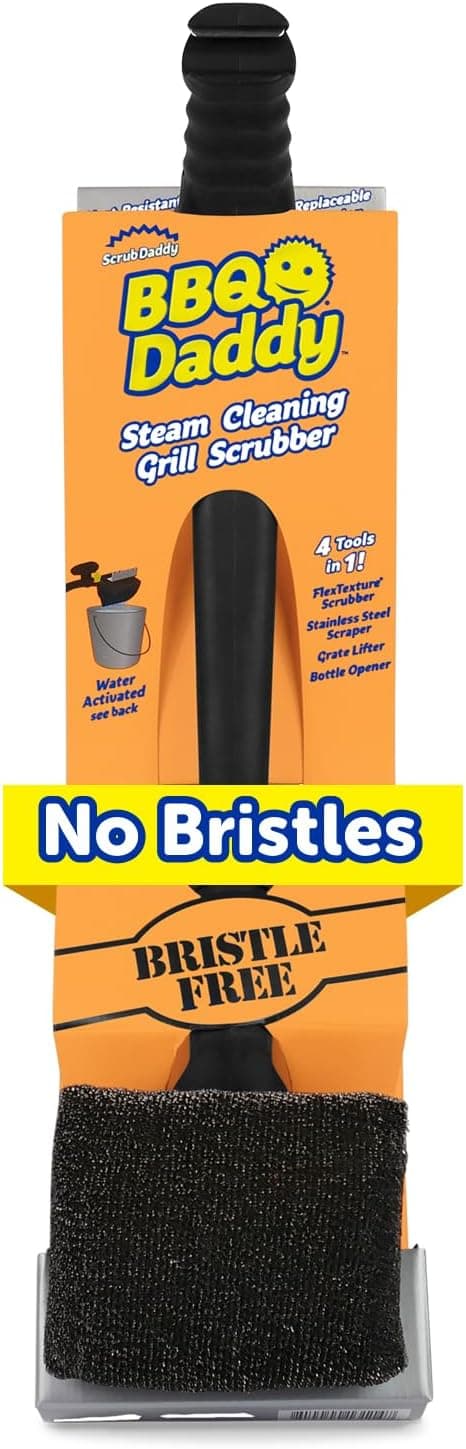
Scrub Daddy BBQ Daddy Grill Brush
Best for cleaning a hot grate with nothing loose to shed
Pairs a steel scraper for hardened carbon with a scrub head made from the temperature-reactive material the brand is known for, which firms up and softens with heat. Being bristle-free removes the failure mode this whole category exists to warn about — there are no loose wires to shed onto the grate. Two cleaning surfaces on one head means you actually use the right one.
Bristle-free, steel scraper + scrub head
Oiling the grate instead of the food
CommonHow to confirm it
You are getting smoke and flare-ups as soon as the food goes on, and the grate looks glossy rather than dry. Oil applied to a hot grate burns off before the food arrives and leaves varnish behind.
How to fix it
- Oil the food, not the grill. A thin coat brushed or misted onto the surface of the protein does the actual work.
- Reserve the oiled-cloth pass on the grate for after cooking, as corrosion protection rather than as a release layer.
- Never spray aerosol or pump oil at a lit grill or a hot grate.
- Use a refined oil with a high smoke point; olive oil smokes and turns bitter at searing temperatures.
Repair or replace — Fix it yourself by changing the order of operations. A sprayer helps you use less oil but the technique is the fix.
Seasoning has broken down on cast iron
CommonHow to confirm it
The grate used to release cleanly and now does not. Look for dull gray patches, or areas where water no longer beads. That is bare metal showing through a failed seasoning layer.
How to fix it
- Scrub the affected area back to clean metal with a nylon pad and hot water, then dry it completely with heat.
- Apply a very thin coat of high-smoke-point oil and wipe until the metal looks dry rather than glossy.
- Bring the grill to 400–450°F and hold it there for 40–60 minutes with the lid closed so the oil polymerizes.
- Repeat the wipe-and-bake cycle three or four times; thin layers build a far more durable surface than one thick coat.
Repair or replace — Fix it yourself. Cast iron is almost always recoverable, and the process is time rather than money.
Lean or delicate food with nothing to release from
Less commonHow to confirm it
It sticks only with fish, chicken breast, lean burgers or vegetables, while a well-marbled steak comes off cleanly on the same grate.
How to fix it
- Oil the food generously and season it right before it goes on — salt draws moisture to the surface if it sits.
- Leave skin on fish and cook it skin-side down first; the skin is the release layer.
- Give delicate items a longer contact time before the first attempt to move them, not shorter.
- For very fragile food, use a grill basket or a plancha rather than fighting the bars.
Repair or replace — Fix it yourself with technique. This is not a fault in the grill, it is a property of the food.
Porcelain coating has failed on coated grates
RareHow to confirm it
Hard, curved, shiny-on-one-side chips are coming off, and the sticking is localized to the bare patches. That is coating failure, not residue.
How to fix it
- Stop using metal brushes on the grate immediately — they accelerate the failure.
- Accept that a shedding porcelain grate cannot be repaired or reseasoned.
- Replace the grate with the model-specific part, or switch to bare cast iron and season it.
- While the old grate is in service, check under a bright light before every cook for loose chips.
Repair or replace — Replace the grate. Once porcelain starts shedding it will keep shedding, and the flakes end up in food.
All the causes side by side
| Cause | How to confirm | Fix time | Part needed | Difficulty |
|---|---|---|---|---|
| The grate was not hot enough | Hold your palm about four inches above the grate. If you can leave it there for more than three or four seconds, the surface is nowhere near searing temperature regardless of what the dome thermometer says. | 15 minutes | None | Easy |
| Carbonized residue left on the bars | Run a fingernail or a scraper along a cold bar. If you lift dark flaky material rather than reaching smooth metal, the food is bonding to old residue instead of to a clean surface. | 30 minutes | Grill Brushes & Scrapers | Moderate |
| Oiling the grate instead of the food | You are getting smoke and flare-ups as soon as the food goes on, and the grate looks glossy rather than dry. Oil applied to a hot grate burns off before the food arrives and leaves varnish behind. | 2 minutes | None | Easy |
| Seasoning has broken down on cast iron | The grate used to release cleanly and now does not. Look for dull gray patches, or areas where water no longer beads. That is bare metal showing through a failed seasoning layer. | 3 hours | None | Involved |
| Lean or delicate food with nothing to release from | It sticks only with fish, chicken breast, lean burgers or vegetables, while a well-marbled steak comes off cleanly on the same grate. | 5 minutes | None | Easy |
| Porcelain coating has failed on coated grates | Hard, curved, shiny-on-one-side chips are coming off, and the sticking is localized to the bare patches. That is coating failure, not residue. | 20 minutes | None | Moderate |
Stop it from coming back
Sticking comes back the moment the after-cook habit slips. Residue that would have wiped off in thirty seconds at 500°F turns into hard varnish overnight, and the next cook bonds to that varnish rather than to metal. Scrape while hot, wipe with a lightly oiled cloth, and the surface stays in condition indefinitely.
On cast iron there is a second layer to this: seasoning is a consumable. Each cook takes a little off and each oiled wipe puts a little back. Skip the wipe for a month and you will be stripping and reseasoning instead of maintaining. Porcelain-coated bars need the opposite treatment — no oil, no wire brushes, just gentle cleaning to keep the coating intact.
Related problems
Questions people actually ask
The food. Oil applied to a hot grate largely burns off before the food arrives and leaves a sticky varnish behind that makes things worse. A thin coat on the surface of the protein is what actually prevents bonding. The oiled-cloth pass on the grate belongs after cooking, as rust protection.
Skin and lean muscle both bond readily to hot metal, and chicken is usually cooked at a lower temperature for longer, which gives the proteins more time to form that bond. Dry the skin thoroughly, oil it, and leave it alone for a full two minutes before you try to move it.
It solves sticking and it prevents small items falling through, but it also blocks direct radiant contact, so you get no grill marks and much less browning. Useful for delicate fish and small vegetables, counterproductive for a steak.
Not on a hot grate or near a flame. Aerosol propellant is flammable and the flame can travel back up the spray. If you want to spray, spray the cold food on a plate, well away from the grill.
When it releases on its own. Slide a thin spatula under one edge with light pressure — if it lifts cleanly, the crust has formed. If it resists, wait another 30 seconds and try again. The crust is what unsticks it, so forcing an early flip both tears the food and leaves material welded to the bars.
Sources
pitandsear participates in the Amazon Services LLC Associates Program. If you buy through a link on this page we may earn a commission at no extra cost to you. Full disclosure.