SMOKE & TASTE
No Smoke Ring on the Brisket
THE SHORT ANSWER
The pink ring forms when nitrogen dioxide from burning fuel reacts with myoglobin in cold, moist meat — and the reaction essentially stops once the surface passes about 140°F. That means the ring is set in the first ninety minutes or not at all. Put the meat on cold and unwrapped, keep the surface damp, run a clean fire with real combustion, and accept that a pellet grill will produce a fainter ring because it burns so cleanly.
pitandsear participates in the Amazon Services LLC Associates Program. If you buy through a link on this page we may earn a commission at no extra cost to you. Full disclosure.
Check these first (they cost nothing)
- Check whether the meat went on cold. A brisket that sat on the counter for an hour has already lost the window — the reaction stops once the surface passes about 140°F.
- Think about whether the surface stayed damp. A dry surface early in the cook shuts the reaction down before it has done anything.
- Consider what you are burning. A pellet grill burns so cleanly that it produces very little of the nitrogen dioxide the reaction needs.
- Look at whether you wrapped early. Foil at hour two stops smoke contact entirely, and with it any further ring development.
What's actually causing it
These are ordered deliberately. Number one is the cause that turns out to be the answer most often, so work down the list rather than jumping to the one that sounds most dramatic.
The meat went on warm, or warmed up too fast
Most commonHow to confirm it
The meat sat out before the cook, or the cooker was running hot at the start. The ring reaction essentially stops once the surface exceeds about 140°F, so a warm start closes the window before it opens.
How to fix it
- Take the meat from the refrigerator straight to the cooker — cold and unwrapped.
- Start the cook at a lower chamber temperature, around 225°F, for the first two hours.
- Do not sear or hot-start a cut you want a ring on.
- Accept that the ring is set within roughly the first ninety minutes; nothing you do at hour six affects it.
Repair or replace — Fix it yourself by changing the start. Costs nothing and it is the single biggest factor.
The surface dried out too early
CommonHow to confirm it
The bark set hard within the first hour or two. A dry surface cannot host the reaction, and it also warms faster than a damp one.
How to fix it
- Spritz the surface with water, thin apple juice or a vinegar solution every 45–60 minutes for the first few hours.
- Add a water pan to the chamber to raise humidity and buffer the temperature at the same time.
- Do not apply a heavy sugar rub at the start; sugar sets a crust early.
- Keep the chamber temperature down early — a hot chamber dries the surface before anything else happens.
Repair or replace — Fix it yourself with a spray bottle and a foil tray. No purchase required.
The fuel is burning too cleanly to produce the reaction
CommonHow to confirm it
You are on a pellet grill or a gas smoker box, everything else was right, and the ring is faint or absent. Clean combustion produces very little nitrogen dioxide, which is what drives the reaction.
How to fix it
- Add a chunk of real wood directly onto the firepot or heat deflector if your cooker allows it.
- Use a smoke tube or maze loaded with pellets or dust, lit at one end — the smolder produces more of the relevant gases than the main burn.
- Start with the cooker at its lowest temperature setting, where combustion is least complete.
- Accept the limitation. A pellet cooker produces excellent food with a faint ring, and that is a fair trade rather than a fault.
Repair or replace — Fix it yourself within limits. This is inherent to how the cooker burns, not something that is broken.
Wrapped too early in the cook
CommonHow to confirm it
You wrapped in foil at or before the stall, around hour three. Wrapping ends smoke contact, and with it any further ring development.
How to fix it
- Leave the meat unwrapped for at least the first three to four hours.
- Wrap only once the bark has set to the color and firmness you want.
- Use butcher paper rather than foil if you wrap — it is more permeable and preserves more bark.
- Remember that wrapping is for pushing through the stall and protecting bark, not for flavor development.
Repair or replace — Fix it yourself by wrapping later. The ring and the bark both benefit from patience here.
The ring is there but invisible against overcooked meat
Less commonHow to confirm it
The meat is gray-brown throughout rather than pink at the edge. An overcooked or very lean cut has little myoglobin left to show color even where the reaction happened.
How to fix it
- Verify the finished temperature with a calibrated probe; brisket is generally ready somewhere between 198°F and 205°F by feel, not by clock.
- Probe for tenderness rather than cooking to a fixed number — the probe should slide in with no resistance.
- Slice a fresh face; the ring is often more visible on a newly cut surface than on one that has been exposed to air.
- Rest properly, wrapped, for at least an hour before slicing.
Repair or replace — Fix it yourself with better temperature control. Nothing to buy if your thermometer is accurate.
What you'll need
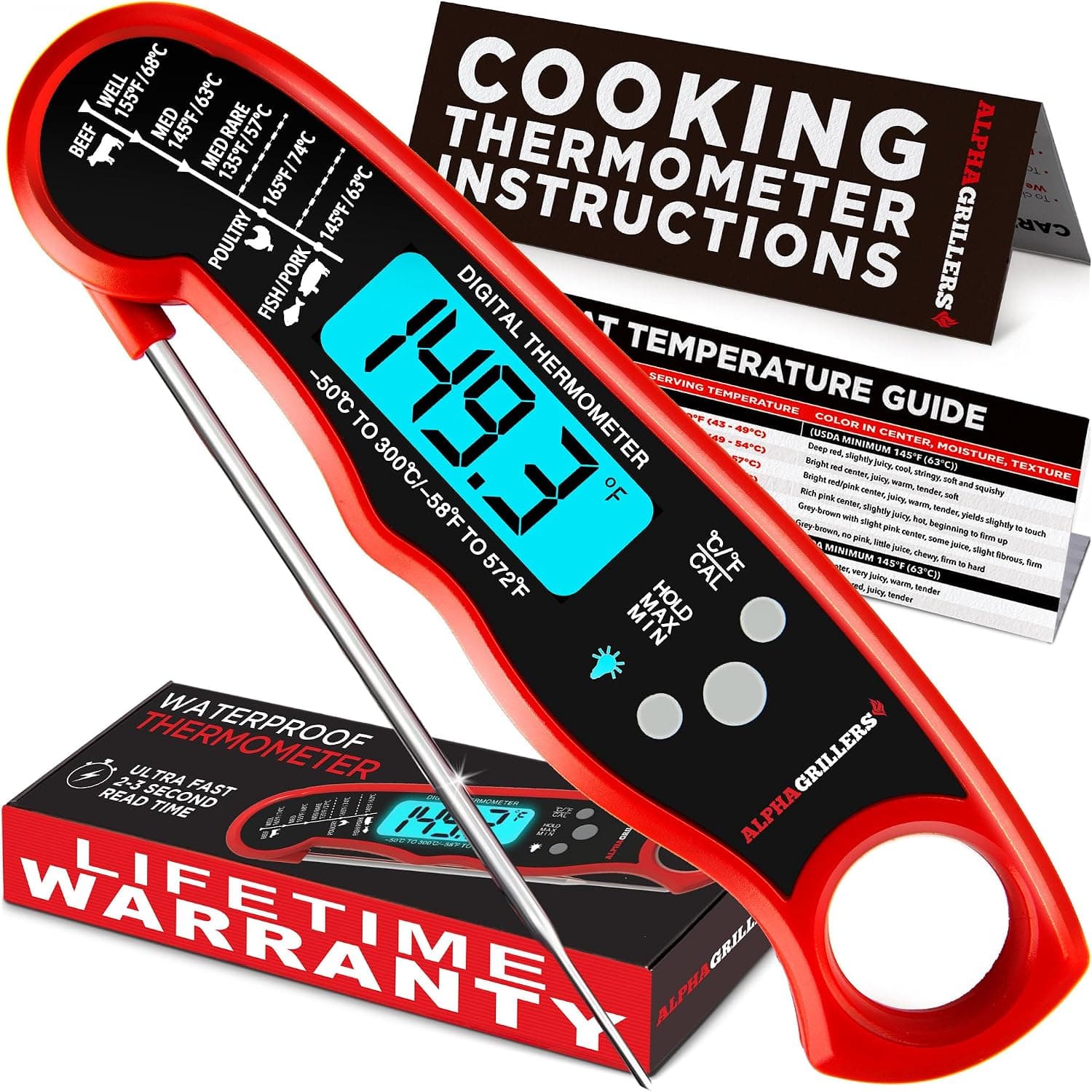 Best Overall
Alpha Grillers
Alpha Grillers Instant Read Meat Thermometer
Best for everyday spot checks at the grate
A straightforward instant-read that covers the job most people actually need: open the lid, get a number in a second or two, close the lid again. The IP67 rating means it survives being rinsed under a tap rather than only wiped, which is usually what decides how long a grill thermometer lasts. It ships pre-calibrated, so the ice-bath check becomes a verification rather than a setup step.
1–2 sec read, IP67, backlit
All the causes side by side
| Cause | How to confirm | Fix time | Part needed | Difficulty |
|---|---|---|---|---|
| The meat went on warm, or warmed up too fast | The meat sat out before the cook, or the cooker was running hot at the start. The ring reaction essentially stops once the surface exceeds about 140°F, so a warm start closes the window before it opens. | 5 minutes | None | Easy |
| The surface dried out too early | The bark set hard within the first hour or two. A dry surface cannot host the reaction, and it also warms faster than a damp one. | 10 minutes | None | Easy |
| The fuel is burning too cleanly to produce the reaction | You are on a pellet grill or a gas smoker box, everything else was right, and the ring is faint or absent. Clean combustion produces very little nitrogen dioxide, which is what drives the reaction. | 20 minutes | None | Moderate |
| Wrapped too early in the cook | You wrapped in foil at or before the stall, around hour three. Wrapping ends smoke contact, and with it any further ring development. | 5 minutes | None | Easy |
| The ring is there but invisible against overcooked meat | The meat is gray-brown throughout rather than pink at the edge. An overcooked or very lean cut has little myoglobin left to show color even where the reaction happened. | 15 minutes | Meat Thermometers & Timers | Moderate |
Stop it from coming back
The smoke ring is decided in the first ninety minutes, so everything that matters happens before most people have finished their coffee. Cold meat straight from the refrigerator, an unwrapped surface kept damp with a spritz or a water pan, and a chamber running around 225°F rather than 275°F all extend the window in which the reaction can run. After the surface passes about 140°F, nothing you do makes any difference.
It is also worth keeping the ring in proportion. It is a marker of a particular cooking environment, not a measure of flavor, tenderness or quality — a pellet grill that burns cleanly produces a faint ring and excellent barbecue at the same time. If your food tastes right and probes tender, a thin ring is a cosmetic result rather than a problem to solve.
Related problems
SMOKE & TASTE
Food Tastes Bitter and Over-Smoked
HEAT & FIRE
Smoker Temperature Keeps Swinging Up and Down
TOOLS & GEAR
Meat Thermometer Reading the Wrong Temperature
SMOKE & TASTE
Everything Tastes Like Lighter Fluid
Questions people actually ask
No. It is a chemical marker showing that nitrogen dioxide from combustion reacted with myoglobin in cold, moist meat. It tells you something about the cooking environment and nothing about flavor, tenderness or smoke penetration. Competition judging has largely moved away from treating it as a quality signal for this reason.
Yes — curing salt containing sodium nitrite produces an identical pink ring with no smoke involved at all, which is exactly why the ring is not evidence of anything. It is legal and harmless in normal quantities, but it is cosmetic.
Because it burns very efficiently with forced air, and efficient combustion produces less of the nitrogen dioxide the reaction depends on. A smoke tube, a wood chunk on the deflector, or starting at the lowest temperature setting all help, but a pellet cooker will generally show a fainter ring than a stick burner.
An eighth to a quarter inch is typical. It cannot go much deeper because the reaction depends on the surface staying below about 140°F, and the interior passes that temperature early. A very deep ring usually means curing salt rather than technique.
It helps with the ring, yes, because it keeps the surface damp and slows the surface temperature rise, which extends the reaction window. It also slows the cook and softens the bark slightly, so it is a trade-off rather than a free win. Spritz for the first few hours and then leave it alone.
Sources
pitandsear participates in the Amazon Services LLC Associates Program. If you buy through a link on this page we may earn a commission at no extra cost to you. Full disclosure.